Somewhere between the chaos of a festival ground in the desert and the precision of a corporate keynote in Singapore lies the reality of touring production. Equipment leaves your warehouse in Los Angeles and returns months later having survived truck beds, cargo holds, humidity, freezing temperatures, and the occasional forklift mishap. Building an AV package that survives this journey—and performs flawlessly at every stop requires engineering decisions that go far beyond selecting quality gear. It demands systems thinking, redundancy planning, and the hard-won wisdom that only comes from watching equipment fail spectacularly at the worst possible moment.
The Case Revolution: Why Packaging Determines Survival
Every veteran touring tech has a story about finding their meticulously packed case on a loading dock, upside down, with a pallet of water bottles stacked on top. The road case isn’t merely a box—it’s the first line of defense against reality. Pelican cases with their injection-molded polymer construction handle moisture and impact but add significant weight for smaller components. Traditional plywood cases from manufacturers like Calzone and Anvil use laminated Baltic birch with aluminum extrusion edges, striking a balance between protection and manageable weight. The choice depends on transport methods: air freight penalizes weight severely, while truck touring tolerates heavier cases that provide superior shock absorption.
Custom foam inserts prevent the catastrophic internal movement that destroys gear. Penn Elcom and ProX offer stock rack cases for standardized equipment, but touring packages benefit from custom foam cuts matched exactly to the gear configuration. Pick-and-pluck foam provides quick customization for smaller items, while CNC-cut foam from specialists like Foam Factory ensures precise fit for delicate equipment. The investment in proper foam pays for itself the first time it prevents a $15,000 lens from becoming a paperweight.
Historical Context: The Birth of Modern Touring
The touring industry’s infrastructure evolved from rock and roll’s expansion in the 1960s and 70s. Bill Graham‘s Fillmore operations and the emergence of arena rock created demand for portable production systems that didn’t exist. Early touring acts improvised with theatrical equipment and repurposed industrial hardware. Clair Brothers (now Clair Global) pioneered purpose-built touring speaker systems in the 1970s, developing the modular designs that modern line arrays descend from. Their S4 system represented one of the first speaker configurations designed explicitly for efficient touring rather than fixed installation.
The transformation accelerated through the 1980s as tours grew larger and production values escalated. Vari-Lite introduced computerized moving lights in 1981 for Genesis’ Abacab tour, fundamentally changing what was possible with touring lighting. These early automated fixtures required massive dimmer racks and proprietary control systems—logistics challenges that drove innovation in case design and truck packing. The solutions developed during this era established principles still followed today: standardized case dimensions, modular system architecture, and ruthless attention to setup efficiency.
Audio Infrastructure: Redundancy Without Excess
A touring audio package begins with console selection, and the choice ripples through every subsequent decision. The DiGiCo SD Series dominates corporate and concert touring because of its reliability record and industry familiarity—finding a qualified operator anywhere in the world takes a single phone call. The Yamaha CL/QL series offers similar ubiquity at a lower price point, with parts and support available globally through Yamaha’s extensive dealer network. Allen & Heath dLive has earned touring credibility through robust construction and intuitive operation, particularly for productions that don’t require the extensive Waves plugin integration some engineers demand.
The stage box and cabling strategy often determines setup time more than any other factor. Dante networking simplifies cable runs—a single CAT6 connection replaces dozens of analog cables between stage and front of house. However, touring Dante systems require backup pathways. Redundant network switches from Luminex or Cisco configured in primary/secondary mode prevent single-point failures. Carry both fiber and copper trunk lines between positions—a damaged fiber can be replaced with copper in minutes, keeping the show running while repairs happen offline.
Video Systems: Modular Approach to Complexity
LED wall touring requires treating panels as consumables rather than permanent assets. Even premium panels from ROE Visual or Absen suffer pixel damage, cabinet dents, and connector wear. Build touring packages with 10-15% spare panels—dead pixels visible during load-in can be swapped before doors without delaying the show. The spare ratio increases for outdoor tours or productions with aggressive handling requirements. Maintain detailed records of each panel’s serial number and position history to identify problematic units before they fail during a performance.
Video signal distribution has evolved toward IP-based systems, though tours often maintain parallel SDI infrastructure for reliability. Blackmagic Design Videohub routers offer cost-effective SDI switching with Ethernet control, while Evertz and Ross Video routers provide broadcast-grade redundancy for higher-budget productions. Media servers increasingly move toward disguise gx series or 7thSense Delta Infinity platforms that can fail over between units automatically. Program the failover behavior before leaving the warehouse—discovering the backup server doesn’t take over correctly during soundcheck creates problems nobody needs.
Lighting: Power Distribution as Foundation
The most sophisticated lighting rig becomes worthless without reliable power distribution. Motion Labs and Lex Products manufacture touring-grade distros designed for repeated assembly and disassembly. Cam-lok connections at the main disconnect and Powerlock for higher-current applications have become industry standards for good reason: their robust designs tolerate the abuse touring inflicts. Label every cable, number every distro box, and create clear documentation showing the power routing for each venue configuration.
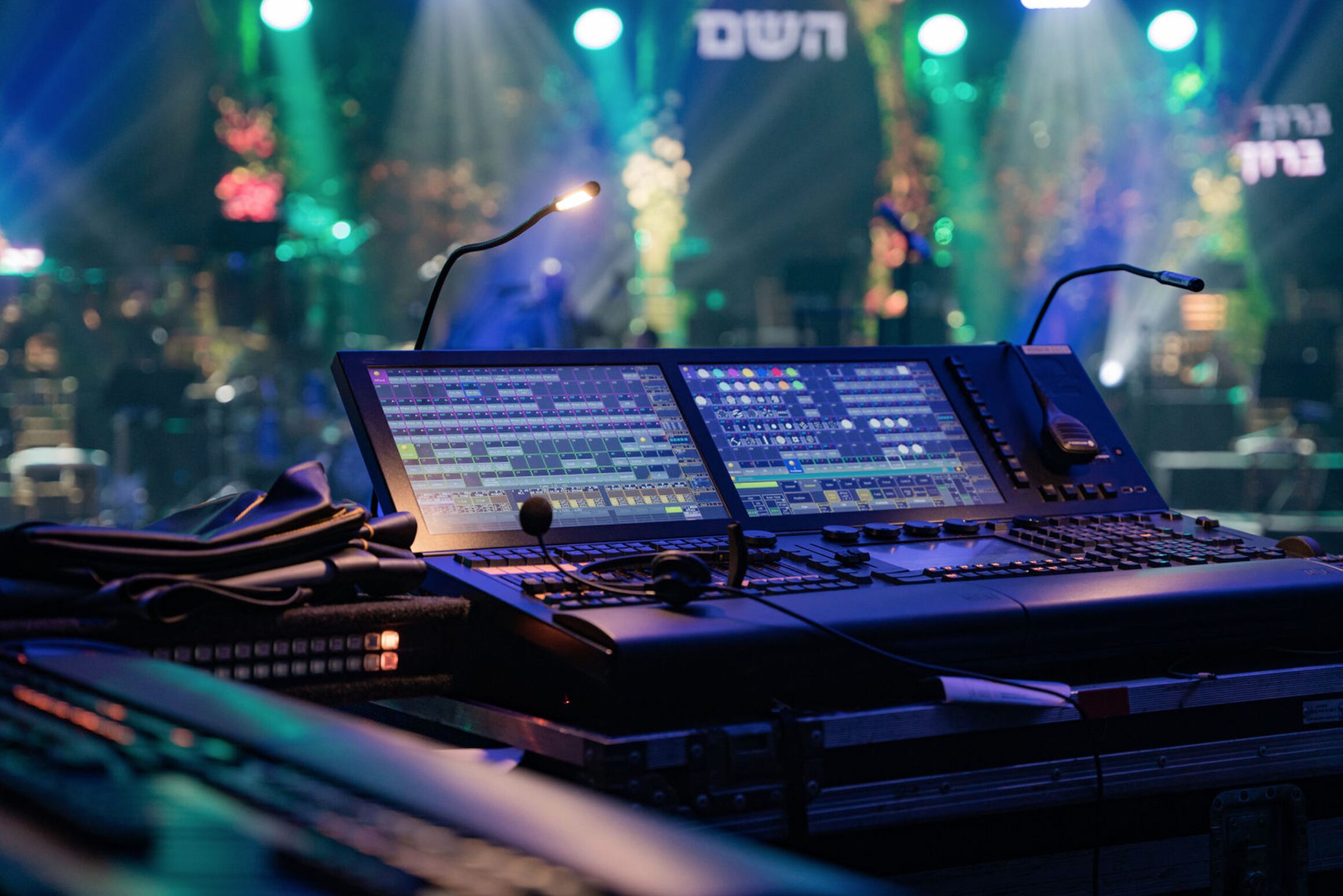
Moving light selection for touring prioritizes serviceability alongside output quality. Martin MAC Encore, Robe MegaPointe, and Claypaky Sharpy Plus all offer field-replaceable components that trained technicians can swap without returning fixtures to service centers. Carry spare color wheels, gobos, and LED modules appropriate to your fixture inventory. The cost of on-site repair parts pales compared to shipping failed fixtures back and forth or flying in emergency replacements. GrandMA lighting consoles dominate touring because of their track record and the ease of finding backup operators—the same logic that drives audio console selection applies equally to lighting control.
Rigging: Safety Above All Considerations
Touring rigging demands zero compromise on safety margins. CM Lodestar and Columbus McKinnon chain hoists have earned their ubiquity through decades of reliable service. Inspect hoists before every deployment—check chain links for elongation, test brake function, verify load cell calibration. ESTA/ANSI E1.6-1 standards govern entertainment rigging practice in North America, while PLASA provides equivalent guidance in Europe. Train crew members to recognize overloaded situations and empower them to stop work when safety concerns arise.
Truss selection affects both rigging flexibility and ground support options. Tyler Truss, Total Structures, and Prolyte manufacture touring-grade aluminum truss in standardized lengths that mix and match across systems. Maintain dimensional drawings for every truss configuration the tour might encounter—advancing riggers need accurate information about trim heights, load distributions, and point locations. Document weight totals obsessively: the truss itself, fixtures, cable bundles, motors, and rigging hardware all contribute to the total suspended load that structural engineers must evaluate.
Communication Systems: The Invisible Infrastructure
Intercom systems form the nervous system of touring production. Clear-Com and RTS partyline systems remain popular for their simplicity and reliability, though modern tours increasingly adopt Riedel Artist or Green-GO digital matrices that scale with production complexity. Wireless beltpacks from Clear-Com FreeSpeak II or Riedel Bolero allow stage managers and riggers to communicate throughout venues without cable constraints. Budget for frequency coordination—touring through multiple cities means navigating different RF environments at every stop.
Production networks have become equally critical as shows incorporate more IP-based systems. Dedicated show control networks separate from venue internet prevent security vulnerabilities and bandwidth conflicts. Ubiquiti offers cost-effective solutions for smaller tours, while enterprise deployments favor Cisco Meraki or similar managed switching. VLAN configuration isolates audio, video, and lighting traffic from each other and from production office connectivity. Document network topology and IP addressing schemes in materials that travel with the gear—troubleshooting network issues during load-in requires immediate access to configuration details.
Spares Strategy: What to Carry, What to Source Locally
The spares kit philosophy distinguishes amateur operations from professional touring. Carry duplicates of everything that cannot be sourced locally within four hours. This typically includes: specialized cables and adapters, proprietary connectors, firmware-specific control surfaces, and any components requiring configuration or calibration before use. A spare lighting console wing loaded with the show file sits in its case until needed—having it available converts a potential show stop into a minor inconvenience.
Establish relationships with rental houses along the tour route who can provide emergency supplemental gear. PRG, 4Wall Entertainment, and PSAV maintain nationwide inventories accessible on short notice. International tours require identifying local partners in each territory—a European rental company can’t ship equipment across borders as quickly as they can deliver within their home country. Pre-negotiate pricing and verify inventory availability before arrival to eliminate surprises when equipment failures occur.
Documentation: The Unsexy Essential
Every piece of equipment should have associated documentation including: serial numbers, firmware versions, maintenance history, and configuration backups. Store this information digitally with cloud synchronization and physical copies in the show bible. Asset tracking software from providers like Rentman or Current RMS manages inventory across multiple trucks and venues. Barcode or RFID tagging accelerates check-in and check-out procedures while creating automatic audit trails.
Create setup guides with photographs showing exactly how equipment should be connected and configured. New crew members joining mid-tour can reference these materials to deploy systems correctly without requiring hands-on training for every element. Include troubleshooting flowcharts for common problems—the person encountering an issue at 3 AM in a loading dock needs clear guidance, not theoretical knowledge. Laminated quick-reference cards survive the production environment better than printed paper, and QR codes linking to detailed video tutorials provide depth when time permits.
Building a touring-ready AV package ultimately requires accepting that perfection is impossible while refusing to settle for inadequate preparation. Equipment will fail, venues will present unexpected challenges, and schedules will compress beyond reasonable limits. The difference between successful tours and production disasters lies in anticipating failure modes and building systems robust enough to continue performing despite them. Every decision—from case selection to spare parts inventory to documentation standards—either contributes to resilience or undermines it. Choose wisely, test thoroughly, and maintain relentlessly. The gear you send out today will face conditions you cannot predict, and its survival depends entirely on the preparation you complete before it leaves your facility.
