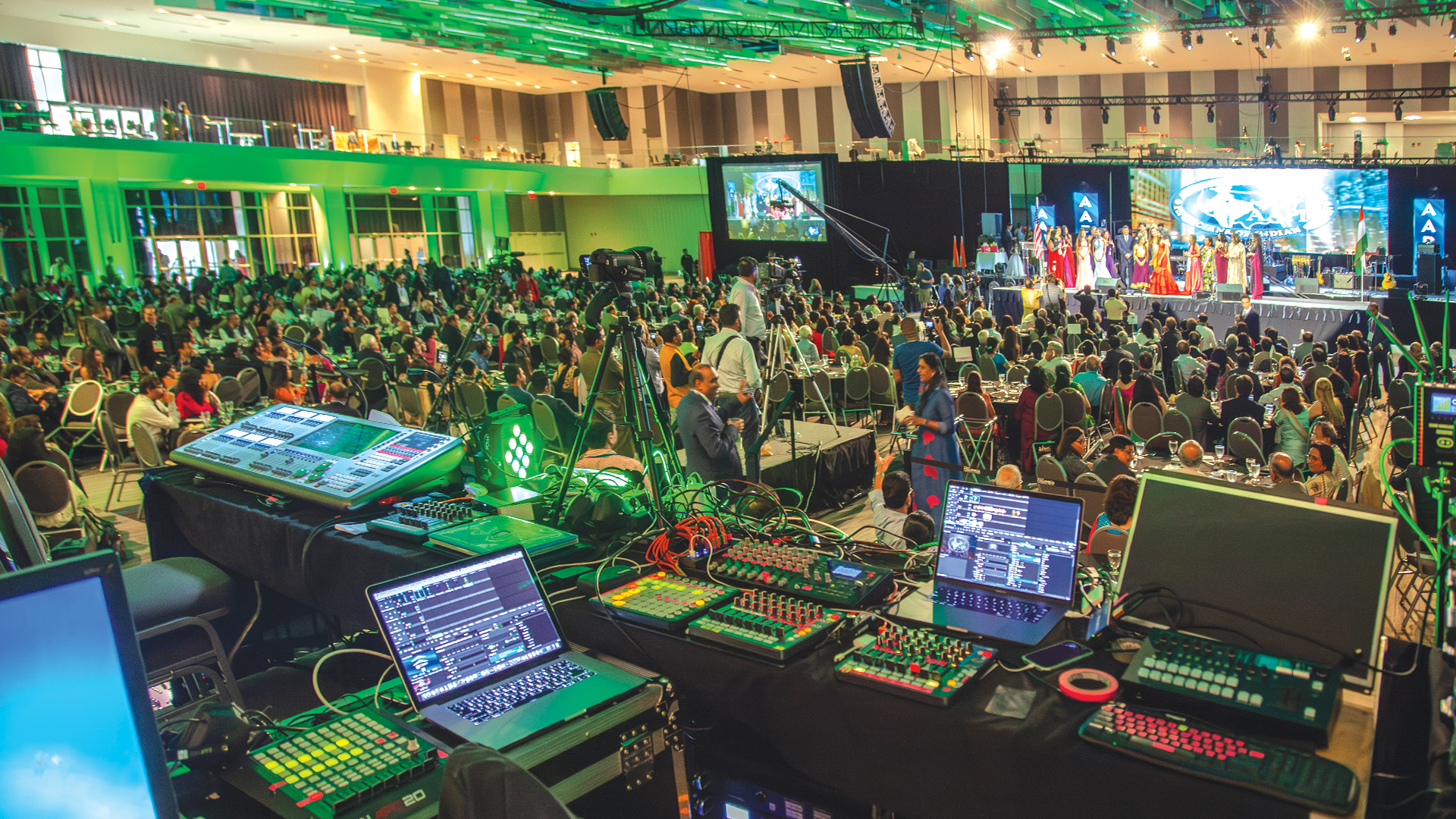
There is a particular species of production anxiety that every experienced AV professional recognizes on sight: the look that crosses a technical director’s face when, at 4 PM on show day, the client walks up with a revised speaker rundown, three new video playback elements, a request to add uplighting to the room perimeter that was never discussed, and the phrase “we just need to make a small change.” Managing last-minute client changes is one of the highest-stakes skills in live event production — requiring technical fluency, interpersonal confidence, and a systematic approach that prevents chaos from cascading through the rig.
Why Last-Minute Changes Are Inevitable
The structure of the events industry almost guarantees late changes. Clients — particularly corporate event clients — are often managing their own stakeholder environment: executives who finalize presentations the morning of the event, sponsors who modify logo requirements at the last moment, presenters who change their minds about video playback formats. Understanding that late changes are a systemic feature of the industry, not an aberration, shifts the technical director’s mindset from reactive frustration to proactive accommodation.
The production companies that handle late changes best are not the ones that prevent all changes — they’re the ones that have built change absorption capacity into their systems from the design phase. Redundant inputs, flexible routing matrices, modular video systems, and pre-programmed macro buttons for common last-minute scenarios are the technical infrastructure of a change-ready rig.
The Change Intake Process
The first and most critical step when a late change request arrives is documentation. Write it down before doing anything else. A request that exists only as a verbal instruction delivered to a distracted technician in a noisy load-in environment is a request that will be misunderstood or forgotten. The change log — even a simple text note in a shared group chat — creates a record of what was requested, by whom, at what time, and what the technical response was.
After documentation, triage the change immediately. Not all late changes carry equal technical risk. A request to change a slide presentation at 3 PM on show day is trivial; a request to add a second video feed to a stage position that was never cabled is complex. Triaging means assessing: impact on existing programming, required physical changes to the rig, time required to implement, and risk of introducing problems while fixing others. Communicate the triage assessment to the client in plain language before beginning work.
Building Change-Ready AV Systems
The most powerful defense against late-change chaos is designing the system to accommodate change from the start. In video systems, this means installing more inputs than initially specified — a switcher with spare HDMI inputs patched and labeled “Spare 1,” “Spare 2” means a new video source can be integrated in minutes rather than requiring a cable run. Ross Video Carbonite, Blackmagic ATEM, and For-A HVS series switchers all offer expandable I/O architectures that make late input additions practical.
In audio, console presets and virtual soundcheck capabilities allow rapid reconfiguration. DiGiCo SD series, Yamaha RIVAGE PM series, and Avid S6L all support snapshot-based scene management where entire mixes can be stored and recalled — meaning a change to the program order (a common late-day modification) can be accommodated by recalling a different snapshot rather than manually adjusting every channel.
The Role of the Technical Director in Change Management
The technical director is the fulcrum between client needs and technical reality. Their role in last-minute changes is to serve as a trusted interpreter: translating what the client wants into what the system can deliver, communicating constraints without appearing obstructionist, and finding creative compromises when the exact request is not achievable.
One powerful technique: never say no directly. Instead of “we can’t add that projection element — it’s not in the design,” try: “Adding a projection element will take approximately 45 minutes and requires repositioning one of the truss sections — if you can give us that time we can make it work, otherwise here’s what we can do in ten minutes that achieves a similar effect.” This approach preserves the client relationship while honestly representing the technical constraints.
Change Control Documentation and Billing
From a business perspective, undocumented late changes are a recurring source of revenue loss and client disputes. A formal change order process — even a simplified one for event production — protects both the production company and the client by establishing clear expectations about what was requested, what was delivered, and at what additional cost.
Best practice: use a pre-formatted change request form (a one-page PDF is sufficient) that captures: request description, technical impact, time required, additional labor cost, additional equipment cost, and client signature. Current RMS and Flex Rental Solutions both support change order modules within their project management workflows. Even clients who initially resist the formality come to appreciate a paper trail when reviewing the final invoice — it demonstrates professionalism and eliminates the ambiguity that leads to billing disputes.
After the Show: Change Retrospectives
The most improvement-oriented production companies conduct post-show change retrospectives — brief reviews of every late change that occurred during an event, what worked in the response, and what could be improved. These reviews feed directly into show design refinements for future events: if the same type of last-minute change (say, a presenter arriving with a Mac instead of the specified PC) keeps occurring across multiple events, the system design should accommodate it proactively. Over time, this retrospective practice transforms reactive chaos into anticipatory resilience.
