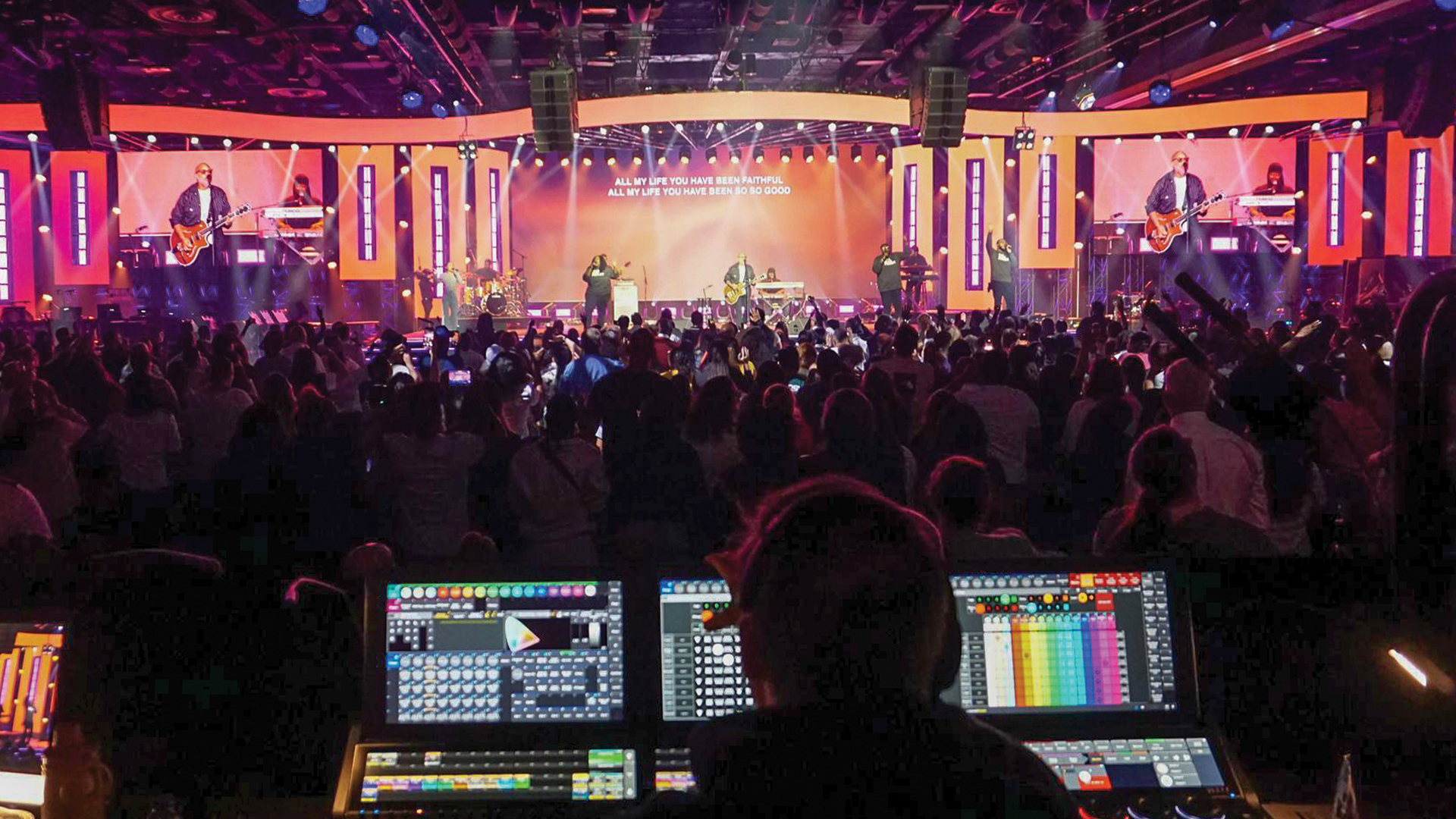
The moment your keynote speaker wraps up a powerful statement and the LED motion borders around them pulse with energy, something magical happens. The audience collectively shifts forward in their seats. That visual punctuation mark—crafted through programmable LED strips framing the stage—transforms ordinary corporate presentations into cinematic experiences that burn into memory.
LED motion borders have become the secret weapon of savvy production designers who understand that attention is currency. When ROE Visual released their CB5 LED series back in 2019, few predicted how quickly animated border lighting would revolutionize the way we choreograph live events. Today, productions ranging from intimate product launches to stadium-filling tech conferences rely on these dynamic framing elements to signal transitions, emphasize moments, and maintain audience engagement through visual rhythm.
The Psychology Behind Peripheral Motion
Human peripheral vision evolved to detect movement—a survival mechanism that modern AV professionals have brilliantly repurposed. When LED border animations activate during segment transitions, they trigger involuntary attention responses without requiring conscious focus. This phenomenon, documented extensively in visual perception research since the 1980s, explains why even audience members checking their phones will look up when border lights begin their choreographed dance.
The practical application starts with understanding content mapping software like Disguise or Resolume Arena. These platforms allow designers to extend video content beyond main screens onto peripheral LED elements. Rather than treating borders as afterthoughts, elite productions now treat them as integral storytelling components. When your media server recognizes a segment change through timecode triggers, border animations can automatically shift—cool blues for data-heavy segments, warm pulses for emotional testimonials, sharp geometric patterns for product reveals.
Hardware Considerations That Actually Matter
Pixel pitch becomes critical when borders sit close to audience sightlines. Productions using Absen PL Series panels with 2.9mm pitch for main screens often drop to ROE Visual Black Marble at 1.9mm for border elements. The logic is counterintuitive—smaller elements need higher resolution because imperfections become more noticeable when your eye has less visual real estate to process.
Power distribution planning separates professionals from amateurs. A typical LED motion border setup running 40 linear feet at full brightness draws significant current. Lex Products power distros with individual circuit monitoring prevent the embarrassing mid-show flicker that kills credibility. Circuit mapping should account for animation peaks—that moment when all pixels fire white simultaneously—not just average operational draw.
Programming Techniques From The Field
Martin P3 System Controllers introduced a workflow revolution when they enabled independent layer control for border elements. The technique involves programming border content on dedicated layers within your media server, allowing real-time intensity adjustments without affecting main screen playback. During rehearsals with actual presenters, lighting designers can dial border brightness up or down based on skin tone reflections and wardrobe choices.
The chase pattern remains foundational—pixels illuminating sequentially around the frame perimeter. But contemporary productions layer complexity through parametric modulation. Using TouchDesigner, designers create border animations that respond to audio input, making borders pulse with applause intensity or calm during quiet moments. SMPTE timecode synchronization ensures border cues align perfectly with presentation beats, eliminating the awkward half-second delays that break immersion.
Segment Transition Strategies
Color temperature shifts provide subtle psychological guidance. Kelvin temperature drops from 6500K to 4500K when transitioning from informational segments to storytelling moments signal warmth and intimacy without announcement. Productions using ETC ColorSource fixtures alongside LED borders can cross-fade ambient lighting simultaneously, wrapping the entire venue in coordinated atmospheric shifts.
Sharp geometric reveals work brilliantly for product announcements. Programming corner-originating animations—where border illumination begins at stage corners and races toward center—creates anticipation during countdown moments. The technique gained prominence during Apple events in the mid-2010s and has since become industry standard for tech reveals.
Avoiding Common Pitfalls
Refresh rate mismatches create distracting visual artifacts when camera crews capture LED borders. Ensuring PWM frequencies exceed 3000Hz prevents the banding that makes broadcast footage look amateur. During prep, smart technical directors test border visibility through reference monitors before approving final programming.
Intensity calibration across different border sections requires patience. LED panels from different manufacturing batches exhibit color variation that becomes glaringly obvious when arranged as continuous borders. Color calibration systems like Brompton Technology’s Tessera processors offer panel-by-panel adjustment, but initial measurement sessions add production hours that must be budgeted.
The Integration Conversation
Modern productions rarely isolate LED borders from broader scenic design. Border elements increasingly wrap around scenic flats, extend beneath presenter positions, and integrate with floor treatments. This three-dimensional approach emerged from theatrical tradition—the Broadway production of “Dear Evan Hansen” pioneered LED integration that production designers now adapt for corporate stages.
Previz software like Vectorworks with Vision rendering allows clients to preview border integration before a single pixel arrives onsite. These visualization sessions prevent the costly discover-during-load-in moments that devastate budgets and timelines.
Measuring Success
Post-event analytics increasingly incorporate attention tracking. Eye-tracking studies conducted by event research firms consistently show 23-31% improved attention retention during segments preceded by border animations. While correlation doesn’t guarantee causation, the data supports continued investment in motion border technology.
The evolution continues. Micro-LED development promises borders with invisible seams and wider color gamuts by 2026. Flexible LED curtains from manufacturers like INFiLED already enable curved border installations that follow architectural features rather than demanding perfectly flat surfaces.
For production companies still treating LED borders as optional upgrades, the market sends clear signals. RFPs increasingly specify animated perimeter lighting as baseline requirements rather than enhancement tiers. Crews who master LED motion border programming position themselves for bookings that others simply cannot service.
The technology democratizes too. Rental inventory management platforms now list LED border packages at price points accessible for mid-tier corporate events. What required stadium budgets five years ago now fits comfortable within standard production allocations.
Your next event deserves borders that breathe, pulse, and guide. The tools exist, the techniques are proven, and audiences have learned to expect visual sophistication that static scenic elements cannot deliver. The question isn’t whether LED motion borders add value—it’s whether your production can afford to ignore them.
