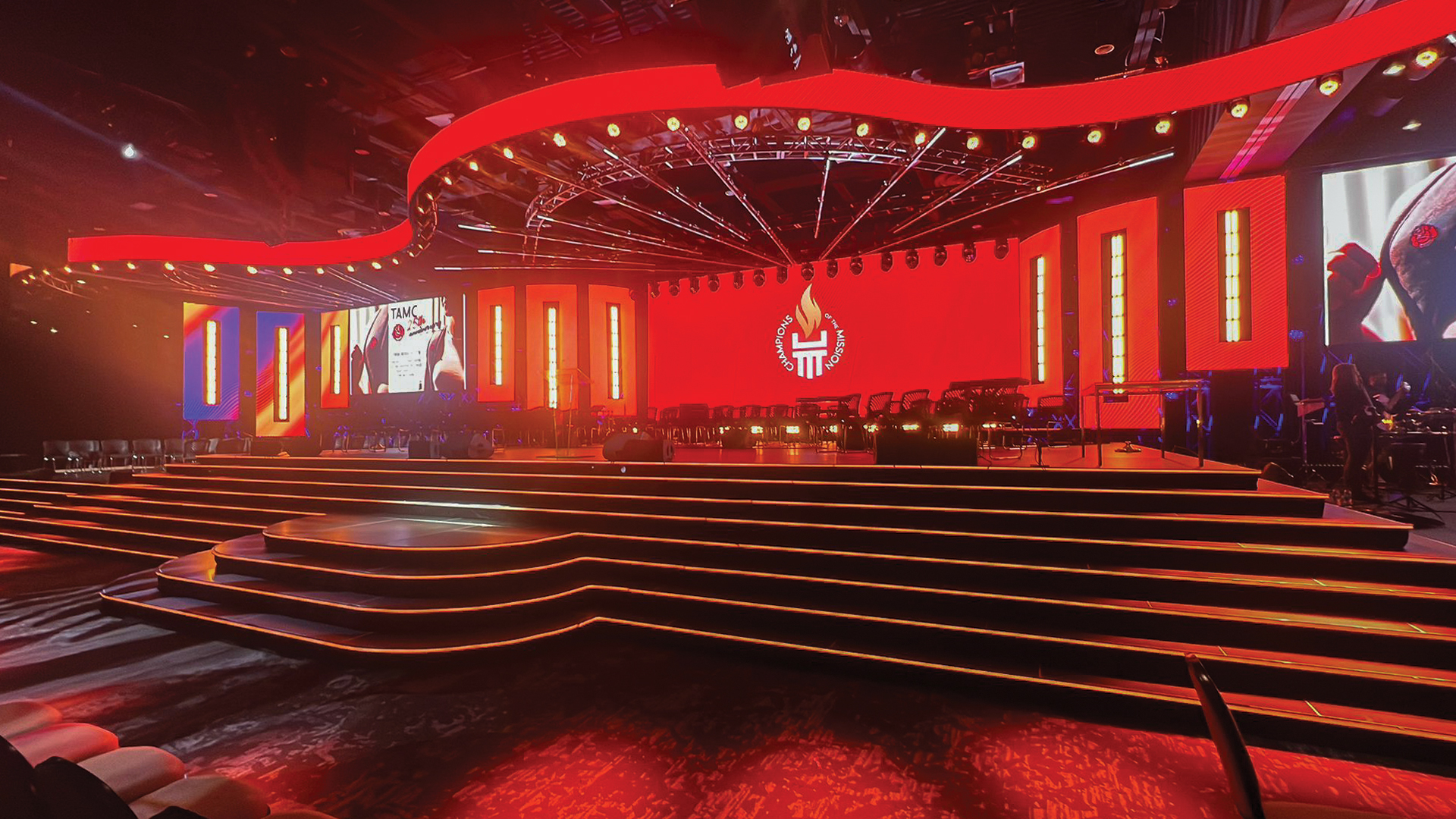
Walk into any major tech keynote venue this year and the visual signature is unmistakable: towering vertical LED columns flanking the stage like luminous sentinels, their portrait orientations defying decades of landscape-format convention. This isn’t arbitrary aesthetic rebellion—it’s a calculated response to how audiences actually process visual information and how presenters actually move through space. The vertical LED revolution rewrites the playbook on keynote stage design.
The Landscape Assumption and Its Limitations
For decades, the 16:9 aspect ratio dominated corporate presentations, a legacy of television broadcasting that transferred wholesale into live event production. LED video walls inherited this horizontal bias, sprawling across stages in wide rectangles that exceeded useful content widths while constraining heights to modest proportions. Presenters found themselves competing with these expansive screens, shrinking in relative scale as displays grew wider.
The mathematical reality of human proportions never supported landscape dominance for speaker-centric content. Standing humans occupy vertical space far more than horizontal—a six-foot presenter spans perhaps two feet of width. When displayed on wide screens, human figures float in seas of negative space or force uncomfortable cropping. Vertical formats respect human geometry, creating displays where presenter images feel natural rather than stretched or compressed.
The Smartphone Generation’s Visual Vocabulary
Consider how modern audiences consume video content outside conference halls. TikTok, Instagram Stories, and YouTube Shorts have normalized vertical video formats for billions of daily viewers. Production teams at companies like Moment Factory have recognized this shift, designing stage elements that speak the visual language audiences already fluently understand. Vertical LED screens don’t feel novel to twenty-something attendees—they feel native.
This generational shift extends to content creation workflows. Marketing teams increasingly produce assets in vertical orientations for social distribution; repurposing this content for keynote displays becomes trivial when screen formats align. The production efficiency gains compound across event cycles, reducing custom content creation burdens while maintaining visual coherence between stage presentations and digital marketing channels.
Architectural Integration and Venue Constraints
Ballroom ceilings impose height restrictions that horizontal LED walls struggle to exploit. A typical hotel venue offers eighteen to twenty feet of vertical clearance—plenty for dramatic vertical displays but limiting for wide screens that would need to drop well below comfortable viewing heights. Vertical LED installations capitalize on available height while maintaining clearance below for scenic elements, presenters, and production infrastructure.
Rigging advantages accompany the vertical format shift. Tall, narrow structures require fewer suspension points than equivalent square footage in horizontal configurations. Load distribution concentrates along single truss runs rather than spreading across multiple parallel members, simplifying installation and reducing venue rigging fees. Companies like PRG and PSAV have developed standardized vertical LED packages optimized for these efficiency gains.
Hardware Considerations for Vertical Deployment
Not all LED panels perform equally in vertical orientations. Viewing angle specifications become critical when screens tower above audiences rather than spreading across sightlines. Products like the Leyard TVH Series and Absen KL Series incorporate wide viewing angles that maintain color accuracy and brightness consistency from floor seating to balcony positions—specifications less critical for eye-level horizontal installations.
Processing requirements intensify for vertical configurations at fine pixel pitches. A vertical screen measuring four feet wide by twenty feet tall at 2.6mm pitch requires nearly identical pixel counts to horizontal displays that would span far greater floor areas. Media server platforms like Disguise and Brompton processing systems handle these unusual aspect ratios, but technical directors must verify compatibility before specifying equipment for vertical deployments.
The Immersive Flanking Configuration
The most impactful vertical LED deployments position multiple screens flanking presenters rather than backing them. This configuration, pioneered by productions for Apple and Google events, creates an immersive corridor effect where audiences feel surrounded by visual content. The presenter occupies center stage without competing against screen content, while peripheral vision engages with supporting imagery that enhances rather than distracts.
Sightline calculations for flanking configurations consider audience positioning across venue widths. Screens angled toward center seating can leave side sections viewing only edge profiles; the solution involves carefully calculated angles that balance center-audience impact against peripheral visibility. Experienced production designers from companies like Sila Sveta use 3D modeling software to preview configurations before committing to physical installations.
Motion Graphics Strategies for Vertical Canvas
Vertical motion requires different design thinking than horizontal animation. Natural gravity associations make downward movement feel passive while upward motion suggests energy and growth. Content creators working in platforms like Notch and TouchDesigner develop vertical-specific animation libraries exploiting these psychological associations—rising particles for product launches, cascading elements for reflective moments.
The narrow width of vertical screens constrains horizontal motion in ways that require adaptation. Content that would pan across wide screens instead layers in vertical stacks, with elements entering from top or bottom rather than sides. This compositional constraint actually simplifies many designs, forcing focus on fewer simultaneous elements while maintaining visual engagement through vertical dynamics.
