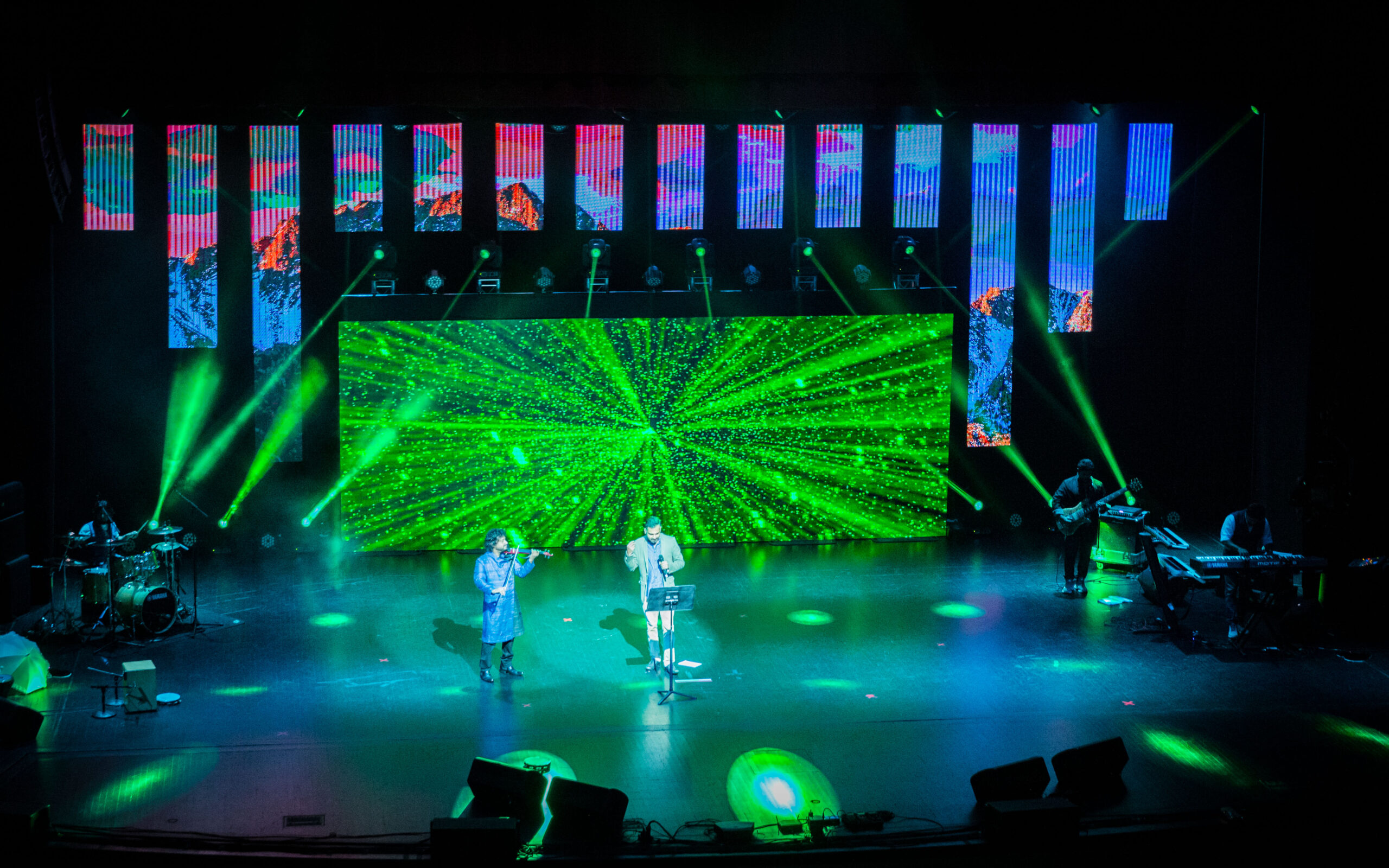
The LED wall went dark at 2:47 PM during the CEO’s keynote—a single power supply failure cascading into visible failure across twelve panels. The production team scrambled, switching to backup feeds and covering with lighting changes while technicians diagnosed and resolved the issue. Three minutes felt like hours. That preventable failure—avoided on countless other events through proper power redundancy planning—illustrates why power infrastructure deserves the same engineering attention as signal distribution and content management.
Understanding LED Power Architecture
LED walls consume substantial power—typically 500-1,000 watts per square meter at full brightness, though actual consumption varies with content and brightness settings. This power flows from venue service through distribution systems to individual power supplies within each panel or in external power boxes. Each component in this chain represents a potential failure point. Power supplies fail most commonly, but distribution cables, circuit breakers, and even venue service can cause problems. Comprehensive redundancy addresses all these failure modes.
Premium LED panels incorporate dual-redundant power supplies that share load during normal operation and provide full capability if one fails. Products like the ROE Visual Diamond Series and high-end panels from Absen and Leyard include this redundancy as standard features. Lower-cost panels often omit redundancy—an acceptable tradeoff for many applications but inappropriate for mission-critical deployments where visible failure creates unacceptable consequences.
Distribution-Level Redundancy
Beyond panel-level redundancy, power distribution design affects overall system resilience. Feeding an entire LED wall from a single circuit means that circuit’s failure takes down the entire display. Dividing the wall across multiple independent circuits limits the failure domain—a tripped breaker affects only one section rather than everything. Professional installations often use A/B power feeds where each panel receives power from two separate distribution paths, either of which can sustain operation independently.
Power distribution units from manufacturers like Motion Labs and Lex Products provide the connection infrastructure that implements redundancy schemes. These units include monitoring capabilities that report power status to production management, enabling proactive response to developing problems rather than reactive scrambling after failures manifest visibly. The ETC Sensor3 and similar intelligent distribution systems add network connectivity for remote monitoring and control.
Backup Power Systems
UPS (Uninterruptible Power Supply) systems protect critical components against brief power interruptions and voltage irregularities. While sizing UPS for entire LED walls proves impractical due to their power consumption, protecting processors, media servers, and control systems ensures that brief venue power glitches don’t require complete system restart. APC Smart-UPS and similar rack-mount units integrate into production equipment racks, providing the seconds of runtime needed to survive momentary outages or switch to generator backup.
Generator backup protects against extended venue power failures. Productions with absolute uptime requirements—live broadcasts, major corporate events, concerts with broadcast components—often specify generator backup despite venue power availability. The transition from venue power to generator must occur faster than LED systems can tolerate without restart, typically requiring automatic transfer switches that detect power loss and switch sources within milliseconds. Testing this failover before critical events verifies that backup actually works as designed.
Building redundancy into LED wall power systems transforms unpredictable failures into managed risks. The additional infrastructure costs less than the reputational and financial consequences of visible failures during critical presentations. Productions that invest in proper power redundancy operate with confidence that technical problems won’t create public embarrassments—enabling focus on content and execution rather than anxiety about infrastructure reliability.
