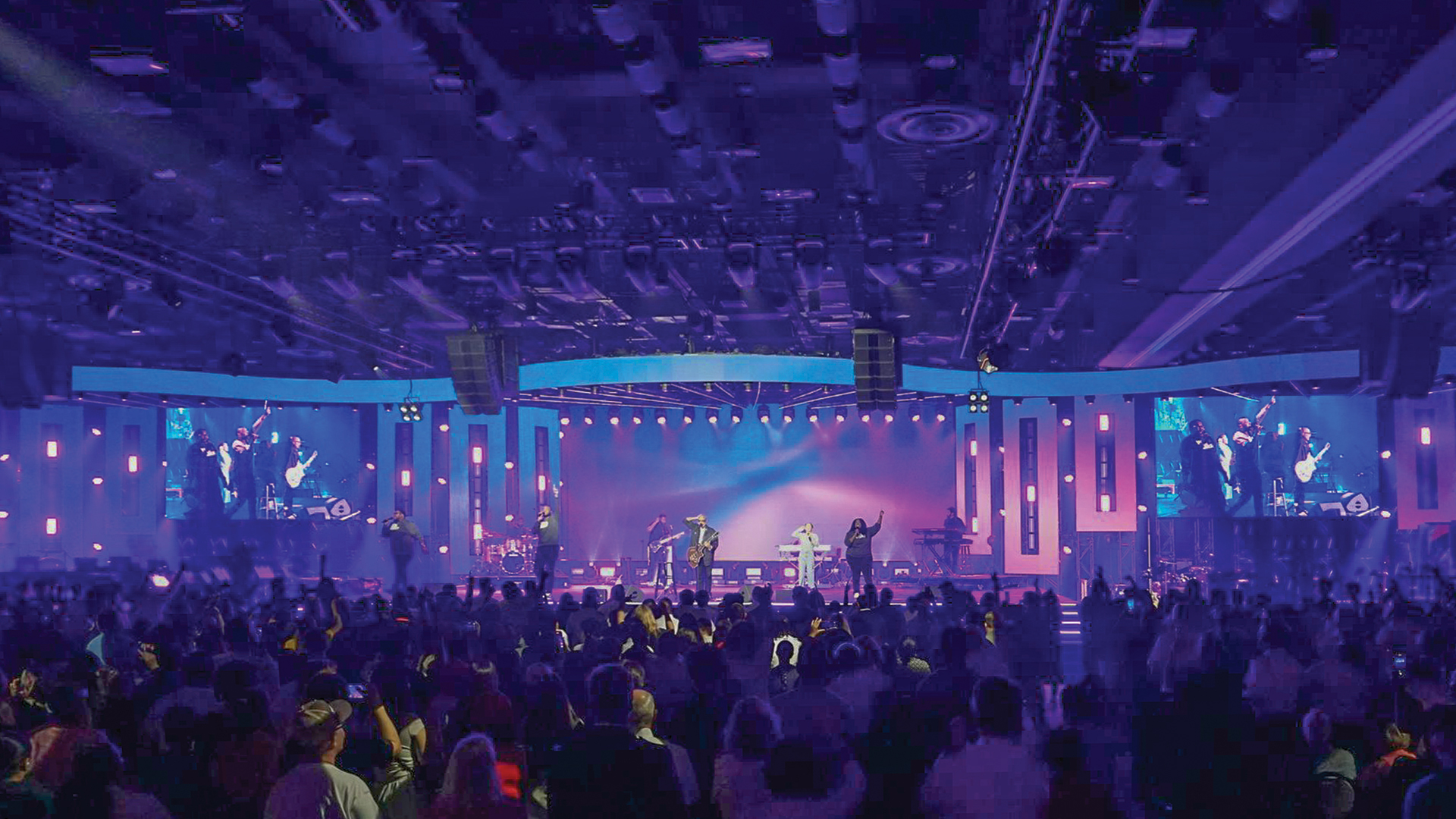
The Speed Revolution in Event Production
When the clock strikes load-in and your crew has precisely four hours to turn a bland convention center into a jaw-dropping corporate theater, every decision matters. This is where truss mounted LED technology becomes your secret weapon—a game-changer that veteran technical directors discovered years ago and guard jealously in their production playbooks.
The evolution from ground-supported LED walls to rigging-integrated systems traces back to the late 2000s when companies like PRG and VER began experimenting with flying lightweight panels during arena tours. What they discovered changed everything: suspending displays from box truss or triangular truss eliminated floor obstruction, reduced setup complexity, and created visual impact that ground stacks simply couldn’t match.
Picture this scenario that unfolds at venues worldwide every weekend: A production team arrives at 6 AM facing an empty ballroom. By 10 AM, they’ve flown eight ROE Visual Black Pearl BP2 panels from a Global Truss F34 grid, creating a stunning backdrop that would’ve taken triple the time with traditional staging. The room transformation? Absolutely instantaneous once power hits those Neutrik powerCON connections.
Technical Foundations That Make Speed Possible
Understanding why truss mounted LED accelerates room transformation requires appreciating the engineering brilliance behind modern rigging systems. The integration of quick-release clamps—particularly models from Doughty Engineering and Manfrotto—allows technicians to secure LED brackets to truss in under thirty seconds per connection point.
The weight distribution mathematics become crucial here. When mounting Absen PL Series panels to Tyler Truss aluminum structures, experienced riggers calculate load per linear foot, accounting for dynamic forces during hoisting. The industry standard CM Lodestar chain motors lift these assemblies at approximately 16 feet per minute, meaning a 20-foot trim height achievement happens faster than brewing decent craft services coffee.
Signal distribution through the truss itself represents another speed optimization. Running SDI and HDMI cables along truss chords using Velcro cable management systems keeps pathways clean while enabling rapid troubleshooting. Many productions now integrate fiber optic runs using OpticalCON connectors, eliminating the electromagnetic interference headaches that plagued earlier copper-based installations.
Venue Categories Where Truss LED Dominates
Corporate events worship at the altar of truss mounted LED because executive audiences expect broadcast-quality visuals without construction-site aesthetics cluttering the venue floor. When Cvent CONNECT or Salesforce Dreamforce productions unfold, you’ll notice how the LED video walls seem to float magically behind speakers, creating depth that ground-supported systems cannot achieve.
The concert touring industry standardized flying LED configurations decades ago, but the real innovation surge happened when hybrid events demanded flexibility. Companies like PSAV (now Encore) and Freeman invested heavily in truss mounted inventory because clients increasingly requested configurations that could adapt mid-event—morning keynote backdrop converting to afternoon product showcase without striking the entire rig.
Broadcast studios represent perhaps the most demanding environment for this technology. The integration of truss LED with robotic camera systems from Ross Video or Vizrt requires millimeter-precise positioning that floor-mounted alternatives simply cannot guarantee when camera dollies roll across stage surfaces.
The Hidden Efficiency Multipliers
Beyond the obvious visual benefits, truss mounted LED installations unlock efficiency gains that cascade throughout production timelines. Consider the reduced ground support equipment requirements—eliminating base plates and uprights means fewer trucks, faster dock loading, and smaller crew calls. A production that might need twelve stagehands for ground-mounted systems often accomplishes the same result with eight when flying panels.
The pre-rig capability transforms warehouse preparation into venue execution speed. Companies like 4Wall Entertainment and PRG maintain pre-built truss LED assemblies that arrive venue-ready, with panels already mounted, cabled, and tested. The on-site work becomes pure hoisting and connection rather than construction.
Maintenance access improves dramatically with truss mounted configurations. When a pixel cluster fails on a flying Unilumin panel, technicians lower the truss section, swap the module, and return to show-ready status in minutes. Ground-stacked systems often require partial disassembly of surrounding panels to reach troubled units—a time hemorrhage that truss mounting elegantly eliminates.
Real-World Transformation Case Studies
The Consumer Electronics Show production teams have refined truss LED deployment to an art form. Walking the Las Vegas Convention Center during CES reveals how major exhibitors like Samsung, LG, and Sony utilize flying MicroLED configurations that transform identical booth spaces into utterly unique brand environments. These installations typically load-in during compressed 48-hour windows, achieving results that permanent installations would require weeks to accomplish.
Award show productions offer another masterclass in truss mounted LED transformation. When the Academy Awards or Grammy Awards crews convert theater venues into broadcast sets, the flying video surfaces create the dynamic backgrounds that define modern ceremony aesthetics. The transition from rehearsal configuration to live broadcast setup often happens during commercial breaks—an impossibility with ground-based systems.
Music festival productions at venues like Coachella or Lollapalooza demonstrate the ultimate stress test for truss LED technology. Environmental factors including wind loads, temperature swings, and festival dust challenge every aspect of rigged video systems. Yet productions consistently deliver because the truss mounting methodology has been refined through thousands of installations worldwide.
Future Trajectories in Mounted LED Technology
The trajectory of truss mounted LED points toward even greater transformation speeds as panel weights continue dropping while resolution densities increase. Manufacturers like Leyard and Planar now produce panels weighing under 15 pounds per square meter, compared to 35+ pounds just five years ago. This weight reduction directly translates to faster rigging and smaller motor requirements.
Integration with virtual production workflows represents the next frontier. As LED volumes become standard for film and broadcast, the techniques developed for event production truss mounting inform studio installation practices. The discipline of rapid deployment meets the precision demands of camera-ready surfaces.
When your next production faces the universal challenge of transforming bland venue architecture into breathtaking visual environments, remember that truss mounted LED isn’t merely an equipment choice—it’s a philosophy of speed, efficiency, and visual impact that separates memorable events from forgettable ones. The room transforms fast because the technology was engineered specifically for that purpose.
