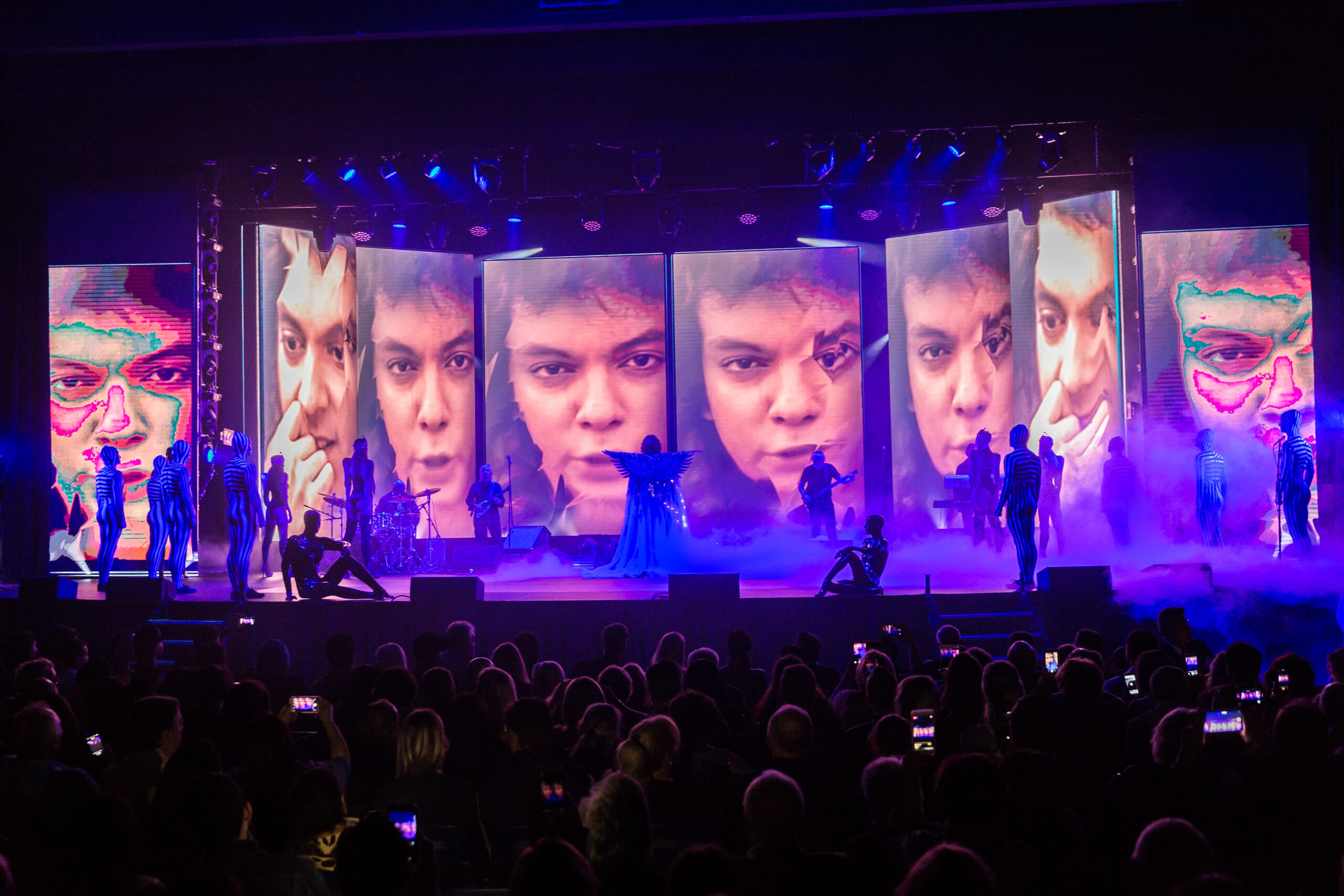
The camera operator reviews the footage and groans every shot of the LED wall shows horizontal banding that wasn’t visible to the naked eye during the shoot. The culprit: a mismatch between LED refresh rate and camera shutter speed that creates the scanning artifacts known as banding or scan lines. Understanding the science behind LED refresh enables production teams to prevent these problems, ensuring that LED walls look as good on camera as they do in person.
How LED Panels Actually Display Images
LED panels don’t illuminate continuously—they scan through rows of pixels sequentially, with each row illuminating briefly before the next row activates. The refresh rate measures how many complete scan cycles occur per second, expressed in Hertz (Hz). A 3840Hz refresh rate means the panel scans through all rows 3,840 times every second. To human vision, this scanning appears as constant illumination because our eyes integrate light over time but cameras with fast shutter speeds capture individual moments where only portions of the panel are illuminated.
Scan multiplexing affects how this scanning behavior manifests visually. A 1/8 scan panel divides its rows into eight groups, illuminating each group sequentially. At any instant, only one-eighth of the panel’s LEDs are actually lit. This multiplexing reduces driver chip requirements and costs but increases the shutter speed sensitivity. 1/4 scan and 1/2 scan panels illuminate larger portions simultaneously, improving camera compatibility at higher component costs. Premium panels designed for broadcast applications often specify high scan ratios precisely because camera capture represents a primary use case.
The Camera Shutter Relationship
Camera sensors expose for specific durations determined by shutter speed settings. A 1/60 second exposure integrates light over that duration; a 1/1000 second exposure captures a much briefer moment. When shutter speeds align poorly with LED scan rates, the camera captures images where some rows appear fully illuminated while others appear dark—the characteristic banding artifact. The mathematical relationship determines when problems occur: if the shutter duration doesn’t encompass complete scan cycles, partial scans become visible.
The solution involves either increasing refresh rate until multiple complete scans occur within any shutter duration, or adjusting shutter speed to align with scan cycles. Brompton Technology processors include features specifically addressing this challenge. Their Extended Bit Depth processing increases effective refresh rates beyond base panel capabilities. Genlock synchronization aligns panel refresh with camera frame rates, ensuring consistent timing relationships that prevent banding. These features have made Brompton processors standard equipment for broadcast and virtual production applications where camera capture quality is paramount.
Practical Refresh Rate Guidelines
Different applications demand different refresh rate specifications. For live events without broadcast, 1920Hz refresh typically provides acceptable performance for casual photography and smartphone video. Corporate events with IMAG and professional video capture benefit from 3840Hz or higher refresh. Virtual production and high-end broadcast applications typically specify 7680Hz or higher refresh rates to provide maximum flexibility for camera operators shooting at various shutter speeds and frame rates.
Panel specifications from manufacturers like ROE Visual, Absen, and Unilumin include refresh rate ratings, but achieving those ratings requires appropriate processor configuration. A panel rated for 3840Hz refresh delivers that rate only when driven by processing that supports it. Novastar, Colorlight, and Brompton processors each have different capabilities and configuration requirements for achieving optimal refresh performance. Production teams should verify actual refresh rates with the specific equipment combination planned for their event, not assume specifications will automatically materialize.
Testing and Verification
Before any broadcast or recorded content involves LED walls, camera testing should verify acceptable performance across the shutter speed range operators anticipate using. Shooting test footage at various shutter speeds reveals the point at which banding becomes visible. This testing should use the actual cameras, lenses, and LED configuration planned for production—different camera sensors exhibit different sensitivity to scan artifacts, and changing any variable can affect results.
The slow-motion capability increasingly common in modern cameras creates particular challenges. Shooting at 120fps or higher for slow-motion playback requires extremely fast shutter speeds that stress LED refresh capabilities. Productions planning significant slow-motion work should select panels and processing specifically rated for high-speed camera applications. Testing becomes even more critical—what looks acceptable at standard speeds may exhibit severe banding when shutter speeds increase for slow-motion capture.
Understanding LED refresh science empowers production teams to specify appropriate equipment, configure systems correctly, and troubleshoot problems when they arise. The invisible scan that human eyes cannot perceive determines whether LED walls photograph beautifully or create unusable footage. Investing attention in this technical foundation prevents the disappointment of discovering artifacts only when reviewing footage after the moment has passed.
